illustrations by Jameson Currier
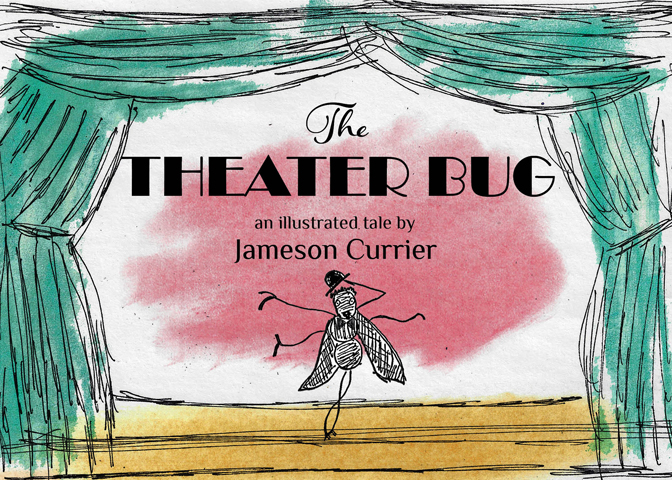
The Theater Bug
by Jameson Currier
It was a buggy summer, even on the Island. At the summer house we began to spend more time indoors than outside, our poolside lunches, barbecues, and cocktail hours hampered by the increasing number of flies, mosquitoes, and other biting, flying insects that seemed drawn to our place. There were sixteen of us sharing the house that season, though never more than twelve of us out at one time on a weekend, what with the shares and half-shares and quarter-shares and guests crashing on the convertible sofa. None of us could seem to deter the pesky insects, not with scented candles or torches or lotions or sprays. It got to be a running joke between whoever among us was out at the house—how these tiny little creatures were dictating our summer adventures; even the biggest, toughest, meanest-looking of us screaming drama queens were watching the surf and sunshine and the parade of beautiful men through our glass doors and picture windows.
Even the houseguests remarked how strange it was that we spent so much time inside, and David, our clever and overly handsome ever-resourceful leader, set up fans to create a cool breeze through the rooms and keep the bugs that had found their way inside the house from alighting on us. Our evening dinner parties soon turned into elaborate candlelight spectacles of gourmet dishes instead of the more light, waterside fare. One night around the dinner table late in the season (and at the height of all this bugginess) we had three guests over for dinner—a buff young couple of musical comedy junkies from another house and an older British actor who was a houseguest of Tino, our resident musclehead and exhibitionist (in spite of his visible bug bites). The tall, barrel-chested, dark-voiced actor was something of a minor celebrity amongst our youngish, urban crowd—he had trained at the Royal Academy in London and played many Shakespearean roles on the West End. He’d done several films and a failed sitcom and then, in his fifties, come out of the closet and begun playing an assortment of more gentlemanly, supporting roles—divorcés, übervillains, widowers, pedophiles—that sort of thing. He had just finished appearing in a one-man play at an off-Broadway theater where Tino was the house manager—hence the invitation to the summer house, and David, whose weekend it was to oversee the evening menu, had concocted a four-course spectacle of salads and chilled soups and seared salmon to impress our special guest.
Ian—that wasn’t the actor’s name but I shall call him that because I think it suits the purpose nicely—was appalled that we were dining inside on such a beautiful, starry night, but after five minutes outside with his sweating cocktail glass and swatting at the bugs, he soon adapted to our more interior, breezy lifestyle. Once the rest of us were comfortable that he was comfortable, we began relating our own comical skirmishes and wounds from our weekend pests. Neil, my well-groomed but highly anal-retentive boyfriend, ate all his meals at the summer house with a flyswatter nearby, not about to let the bugs get the better of him (or his portions of the food), and mentioned to Ian that he had abandoned all scented grooming products that could attract any sort of insect—cologne, aftershave, deodorant—much to the delight of Rick, Tino’s aggressively honest, tightly built bulldog of a boyfriend, who refused to trim, clip, or groom any bit of his excessive body hair to fit in with the “fascist norms of gay style consciousness.” Pale-skinned Wally, David’s roommate and the only other single, unpaired man in the summer house, said cleanly shaved scent-free skin proved no deterrent to the bugs, either, their bites remaining as annoying and problematic as razor burn and acne. “The scourge of the fundamentalists won’t do us in,” David laughed, as he gathered us around the dinner table. “Nor will divine retribution in the guise of a gnat.”
“There was a summer like this when I was a boy in England,” Ian began telling us somewhere over the chilled soup. “Buggy. Flies and gnats everywhere you walked. A few years after the end of the War.” Tino had explained in advance of Ian’s arrival that the actor loved to entertain his backstage audiences with rambling tales of his sexual adventures, particularly with other celebrities, both minor and major, and we were prepared to listen to any and all he wanted to share with us and I assumed that this would be one of those kind of tales. “There was one particular place in the village where I lived that you were sure to get bitten—the meadow opposite the church graveyard. This was where the theater troupe set up their tents for two weeks in the summer and it had a large and flat enough space to stretch out their tenting before the hill sloped upward—the only place, really, where a stage could be set up in the entire village.
“They’d been coming here for years; the troupe was run by a London actor—a stout, middle-aged fellow who was prone to hammy monologues—and there were maybe six of them altogether in the company—mostly young chaps in their late teens or early twenties who had been too young for the War or had left it behind and were hoping for some kind of training or work or both. They all slept in the back of the tent on cots and bathed and took their meals at the public house and they traveled with a small upright piano—there weren’t many of them in our village—and because the parson or the parishioners forbid them to do certain plays—such as Macbeth or Midsummer Night’s Dream or anything by Molière—they drew their biggest crowds—about a grand total of fifty per performance—by doing pantomimes and musical skits.
“We were well behind the times with the rest of England. I wasn’t even allowed to see those performances; me Pa and Mum were convinced that anything on the stage was the work of the devil, but we were the first house outside the village (or the first house on the edge of the village, depending on how you looked at it) and it was easy enough for me to sneak out and see the shows with me mates. There was always a way for us to weasel our way into the tent without paying and stand at the back and watch—and sometimes I think the old fellow—Osborne was his name—would have been disappointed if we didn’t. The first time me Pa found out that I went to the shows he slapped me and threatened to take a belt to me, but I know it was all tied up with his own pride—we couldn’t really afford to pay to see the shows, even as cheap as they were.
“They weren’t a great troupe but the younger boys dressed up to play women and even at his worst, old Osborne could rattle you with a good monologue from Hamlet or Anthony and Cleopatra. He was always flirting with the village women—both from the stage and after the show in the public house—but it always seemed he had a special boy around—someone in the company he doted on and gave the best parts to—and during the day he would sit on a crate outside his tent while the other boys mended costumes or patched the tent and ask passersby what they thought of his latest protégé.
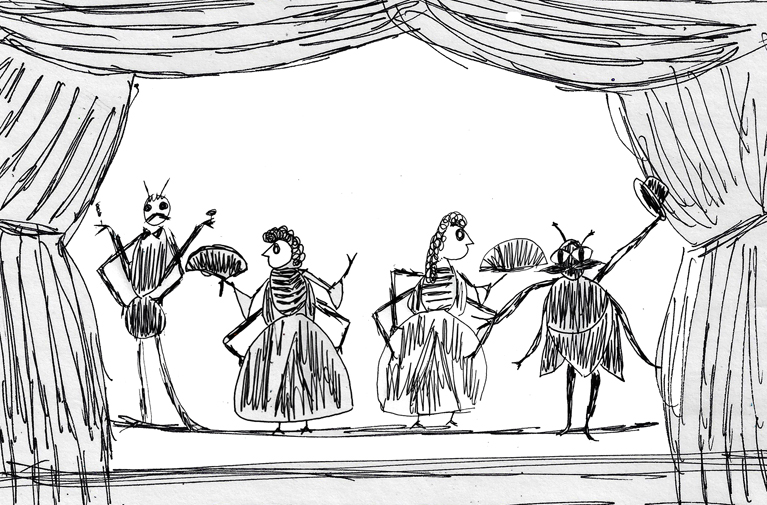
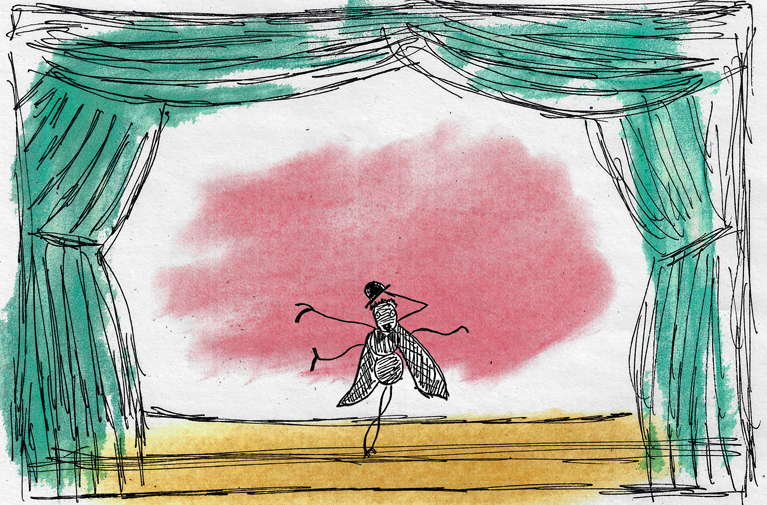
“There were plenty of gossip and scandals going on whenever they were in town—Osborne was always trying to keep his lads from chasing some young townie lassie—or laddie, mind you—even his special one was always up to having a go with someone else—they were a real randy crew, all them boys. There was one particular fellow that Osborne had a fancy to the year I was fourteen or fifteen—fifteen, I think—not so long ago I should hope—and he was a beauty—dark floppy hair, long lashes, pale blue eyes—Kent Kiernan, was his name—and he took up with one of me mates—Trevor, the butcher’s son, who was older than the rest of us—sixteen, seventeen, I guess, because he was working in his pa’s store and itching to set out on his own to London.”
Ian paused his story long enough for David to clear the soup bowls from the table and bring the dinner plates from the kitchen, gossiping for a moment about the “beautiful wisp of a divine youth” Tino had noticed on the ferry ride who kept staring at Ian as if they had met before, until “the dawn of enlightenment occurred and he realized I was that actor from that hideous children’s show I did a decade ago.”
From the kitchen there was some banging and clanging of utensils and drawers and David returned; platters of steaming vegetables and potatoes were passed around, silverware reached for, and Ian took a taste of the salmon and said, “My goodness, you should become professional at this.”
“Pride and manners are my downfall,” David answered, relaying a short anecdote of his aborted enrollment at a noted culinary institute because he realized it was “as vicious as working in the theater.”
“And what did I do?” David laughed at himself. “I went out a got a job as a stage manager.”
We all laughed at both his fortune and his misfortune. All of us in the house were connected in some way to the theater, presently or in our pasts. Rick was an electrician, who worked for a lighting designer, which is how he met Tino one night at a theatre two years before. Wally had the highest profile job, as a casting agent for theater, film, television, and commercials, which was how he had met Neil and invited him to take a share in the summer house. Neil was an advertising executive, whose many accounts included three off-Broadway productions. As for myself, I was a freelance copywriter, which was how I had met Neil, trying to earn some money while I was working on writing my first play.
“It was a small village, did I tell you that?” Ian said, resuming his story after an acceptable pause in the dinner chatter. Across the table I noticed Tino’s eyes were bright and engaged in the tale, while Rick’s seemed distant, distracted inward—they’d been fighting about something all weekend that the rest of us had not been privy to, most likely over a telephone message that had not been relayed properly, since both fellows liked to keep their weekend schedules “open and independent of each other.”
“North of Lancaster—almost up to the lakes,” Ian said. “Lots of folks still didn’t have cars then—rode into the village to see the shows on their bicycles, a few even on horses, I recall. There were plenty of country houses up on the fells by then—owned by bankers, businessmen, gentry, those sorts—some of them came into town for the shows, too.
“One morning one of the cooks who worked up at Benton Hall—one of the larger country houses—they had a year-round staff of about eight, I think, and it was one of those warmish, damp and foggy summer mornings, and, well, she had to pass the church and the tenting on the other side and the slope of the meadow on her way into the village. As she passed the southern gate, she noticed a dark lump of something up on the hill near where the slate fence divided the property and another meadow began.
“At first she thought it might be one of the sheep that had died or been slaughtered by another animal or something during the night—because what had caught her eye was a dark patch on the meadow that could have been blood. Well, when she walked closer to check it out, she realized it was old Osborne, lying there dead and still wearing the long dark coat he usually performed in, and the dark patch on the ground around him was indeed his own blood. When she turned to look away from the site, she noticed another dark clump near the stone wall that ran along the side of the road. She took in a big gulp of misty air and ran straight on to the parsonage on the far side of the graveyard and told the parson what she had seen.
“Edward Sadler was the parson then—and oh, he was a quare old cat himself, but I’ll get to him later—and he rounded up a few parishioners and the postman and soon enough they were all up on the hill behind Osborne’s tent, looking at the body. Osborne had been hacked in the chest by a large blade—some kind of hatchet or cleaver—and it was a grisly sight, mind you—you could actually see the breastbone exposed.
“In her misery, the cook who had discovered the body had forgot to tell the parson about the second body she had thought she’d seen—over by the stone wall on the other side of the tenting. And by then all the lads in the troupe were waking up—most of them visibly upset over the state of poor old Osborne—and one of them started saying that Kent Kiernan was missing—he wasn’t in his cot or upstairs at the public house, where he also sometimes slept or went for baths.
“Then, one of the fellows spotted Kent’s body over by the stone wall—dead the same way—sliced through the chest and all. When I heard that later that morning it just tore out my heart—even at fifteen. Kent was something breathtaking to watch—singing, ‘All follow this and come to dust.’ I remember I could not keep my eyes off of him—still not sure if it was because he was such a beautiful girl in that gown he was all dressed up in or because I knew underneath he was also a beautiful boy.”
Ian’s tale continued while David returned to the kitchen in search of second portions for Wally, whose appetite never seemed diminished (or visible on his lanky frame). Stuart, the taller diva from the house next door, stopped the story to ask Ian a set of perfunctory questions about the profitability of the troupe and the amount of villages they played at in a season, and Ian did his best to indulge him with some kind of professional answer. Stuart was also the more business-minded of the two young neighbors and was part of the advisory board of a nonprofit theater company that specialized in reviving old, forgotten and no-good musical comedies. Stuart’s boyfriend, an actor (and the youngest and cutest of us, in my opinion), did not look pleased with Stuart’s deflection of Ian’s story, nor did the others at the table, but soon enough David was back at the table, more portions of food were being passed around, and Ian was back on track before his small, but captivated, audience.
“Well, my dears,” Ian continued, “soon the coroner and the magistrate were there and the rest of the villagers and plenty of people milling around and a reporter showed up from Lancaster—seemed someone phoned someone in another village and the news had started spreading elsewhere. They laid Osborne and Kent Kiernan out on the stage while they tried to sort out the crime and who the next of kin might be and what the other lads might have known. It turned up that Trevor was missing—the butcher’s son—and so were some knives from his pa’s shop—and one of the boys in the troupe cracked under pressure and started talking about seeing Trevor and Kent Kiernan going at it one night in the back of the churchyard, hot and heavy.
“Trevor was never seen again in the village and they buried Osborne and Kent Kiernan outside the church wall, on the north side of the graveyard where they buried all of the village questionables—stillborn babies, unwed mothers, illegitimate actors, that sort of thing. The theater lads left town—the tenting and costumes were left behind—they were torn down and finally burned when no one showed up after a few months to claim any of Osborne’s belongings.
“As I recall there was something of a trial—some sort of mock jury assembled to review the charges—and Trevor was charged but not convicted because he was nowhere to be found and could not face up to the accounts, though me Mum told me a few years later that she thought he was in London and had changed his name and was trying to make a go at being an actor himself. But the real reason he got off was that his parents still lived in the village and were good friends to almost everyone and were thought of as decent, hardworking people.
“They did establish some kind of sequence to the events of the murders, however; Osborne was killed first, it seemed, possibly due to a disagreement with someone, and young Kent was killed later, probably while defending himself from the same attacker.”
A jolt that shocked us all shook the dinner table and once again stopped Ian’s tale. My boyfriend Neil was standing beside his seat with a smug, victorious expression on his face and his flyswatter in his hand. There was a good six years between the two of us and I always felt this translated into Neil’s younger, unapologetic restlessness and dramatic flair for being noticed. I turned to our guest and gave him a weary sort of smile and said, “Well, that’s one less to worry about.”
Ian nodded to me and since we were seated so close to each other, he reached out and placed his hand against my shoulder. It stayed there for a moment while he said, “But like I said it was a buggy summer—don’t worry, I didn’t totter off there—just had to provide the back story and all, you know.”
Ian’s hand continued to remain at my shoulder, suggestively shifting to massaging the back of my neck while he continued to talk, though it was unclear to me whether it was a manner of flirtation or out of sympathy for my plight of having to endure such a boyfriend as Neil. “And after they moved Osborne’s body to the stage of the theater, flies began settling where his blood had been on the meadow, so many that the slope where he had lain looked like it was covered with his shadow. And this went on for days while more people phoned and spoke to the parson for details and asked more questions of the troupe and more reporters showed up in the village.
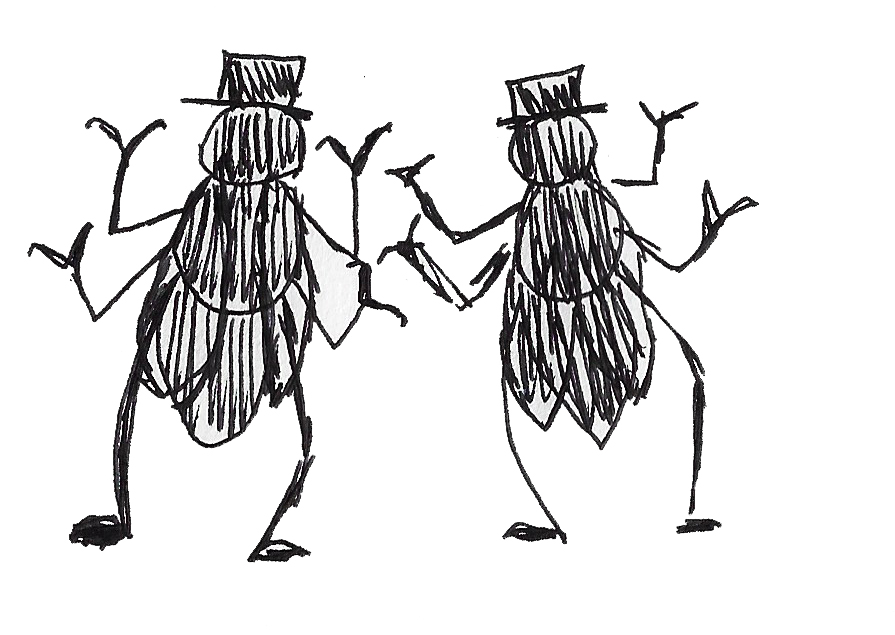
“The meadow where Osborne was murdered got to be a great gathering spot for a while, and one day I was there and one of the reporters thought he would take a picture of the shape of the flies against the grass—it was of great interest to the media of the day—you know how the British press are—flies settling in the shape of a body and all—it was certain to attract them and it was quite a big to-do.
“Well, I was helping this fellow set up a photo, tagging along with him and assisting him up to the ledge of the stone wall where he could look down at the meadow and snap his photograph. He used a flash that day—not exactly sure why, might have been a mistake or, no, it was another one of those misty days, so he might have needed the light—but the flash startled the flies and they rose up in a great mass as if it were the ghost of old Osborne himself awakening from the dead. They swarmed about for a minute and somehow I was caught in their path and bitten several times before they settled again on the side of the meadow.”
Ian removed his hand from my neck and used both hands to demonstrate his battle with the bugs and we all laughed at the performance. Neil stretched out his swatter to him as if to offer a stronger weapon, which made a few of us laugh even harder.
“I didn’t think about it right away,” Ian continued. “I was swatting and laughing and then sort of itching from the stings or bites or whatever they were. But I started to feel strange—dizzy and such—and as the day went on my arms and legs and neck where I had felt the flies land started to swell up. Soon I was home and in bed and the doctor from the next town was dispatched to come look at me. I was quite feverish and spouting gibberish. I was later told that in my delirium I recited a passage from The Taming of the Shrew that Osborne had done one night—he was always testing the rules a little bit more, to see every year what the village audiences would allow him to do.
“I was sick for several days and me Mum was so worried she had Edward Sadler visit me regularly. He would hold my hand and say prayers or recite passages from the Bible, and, as I began to feel better, I noticed he was as hammy as old Osborne had been in some of his line readings.
“I remember one day—one of the dizzy days—telling him how much I wanted to be an actor, like Kent Kiernan had been, and he laughed and said the stage was a fine and noble profession to chose if I were to be serious and committed to it. Me Mum twisted her hands and then they prayed and consulted their Bibles. The parson was a great help in convincing me parents that theaterfolk were not devil-worshippers.
“One day when I was better, the parson brought round a book that had belonged to Osborne—it was a collection of speeches from Shakespeare—and he told me I should try memorizing one of the passages and try it out one night at the church for the parishioners. He touched me a little longer that day than he ever had before—a sort of lingering graze first at my thigh—and then later against my forearm.”
Ian continued talking while I helped David clear the finished plates from the table to make room for a lemon ice pie he had made the day before (which was greeted with a chorus of ooohs and aaahs when I carried it out to the table). In the kitchen, David swatted at a gnat and then slapped the side of his neck, drawing his prey into the tips of his fingers and then washing his hands at the sink. Back in the dining room, the candles were flickering and the tale was continuing as we took our seats again.
“I know that summer was a changing point for me,” Ian said. “Something in me began to stir as I started to get stronger. I memorized Petruchio’s speech from The Taming of the Shrew that was in that book and I went around town reciting it and gesturing like a fool. It got me talking to a lot of people I didn’t normally talk to—older folk, stopping to listen, who would then ask me questions about how I was until I had expired all my news and then they could confess their own—ailments and such, at first, like arthritis or sore joints, but the longer I spent with them, the easier the complaints would turn to gossip.
“It seemed as if everyone in that village was having sex—quare or otherwise—with someone they were not supposed to be having it with, and I soon learned myself that a good little monologue could get me into any girl’s britches or a fella’s trousers that I wanted to get more special with. What a thing, mind you—and it still works today, most of the time, a good tale can still charm the pants off of some folks. I let the parson believe he had deflowered me that year, even though by then I had already been with Bobby O’Hare and Sean Matthias and Lizzie McTarnahan, an older woman who worked at the public house, whose specialty was deflowering young fellas. Everyone was always telling me how good I was with the Shakespeare, so one day I upped and left town, just like Trevor had done, and went off to London to study and become a professional actor.
“Of course there were no more theater troupes coming through my village after that particularly buggy and tragic summer—I did a few stagey things for the villagers—some on my own, some with some other local fellows—but in a year or so there was a picture show held twice a week at the local hall and that sort of killed all the desire to see live theater.
“After I left, me Mum wrote me once in London that the flies had never disappeared from that hillside of the meadow. I was back there about fifteen years ago and I saw it for myself. They were still at the same spot where old Osborne’s body had lain, as if he had only been murdered the day before.”
At the completion of the tale, Stuart did not waste any time asking Ian another question about his career, then inquired about the size of a particular West End theater Ian had once performed in, and soon Ian’s story was completely forgotten. The conversation lingered for a few minutes on the recent influx of American musicals being revived on the London stages, and then the evening seemed to be over, or, rather, the group had dissolved into more intimate conversations and I wandered into the kitchen, helping David wash and dry the last of the dishes.
* * *
It wasn’t long after that dinner party that Rick and Tino officially broke up, though all of us had seen it coming all summer long. I always thought it was because Rick was fooling around on the side with David that summer—they’d hook up downstairs late at night in front of the refrigerator or in one of the bathrooms for a quick thing, but that wasn’t the case at all because David told me later that Rick was fooling around with a lot of guys that summer (not just him). I also heard—from my housemate Wally—when I ran into him in a lobby of a theater in the city sometime that fall after we had closed up the summer place for the season, that Tino had followed Ian to Hollywood, where he was hoping to work as Ian’s personal assistant on the film that Ian was to begin shooting soon. Ian and Tino had been having a thing going since the off-Broadway run of his show and once the play had closed it cleared the way for Tino to begin clearing away Rick (which had been one source of their testiness that summer).
Not long after that I heard that Ian had died of a heart attack in LA, and I remembered how he had pressed his hands against my shoulder and massaged my neck while telling his tale of the buggy summer and the tragic fate of the old hammy actor and his younger beau. I still feel that he was trying to impart something to me in the way he touched me—to flirt me out of my own bad relationship or at least warn me that it was in trouble—and as I recall the absence of his touch—the rise of his hands to flail away the stinging pests of his youth—I can also find an apparition of my own—a forewarning of what was to come. Neil and I broke up at about the same time Rick and Tino did. The oddest thing about ending things with Neil was how liberating it felt to me—we had been a miserable couple for too many years and it must have been more obvious to friends and strangers than I had pretended to myself that it was and maybe that was what Ian was trying to tell me, that it was time not to be so miserable anymore. Neil left me to take up with Rick and when Neil told me that I had to laugh—I didn’t think it would last much longer than its announcement. Rick would have no sort of patience for the kind of needy attention Neil desired, and Neil, I knew, because of our own disagreements, would certainly not settle long for Rick’s roaming, indiscreet eyes.
Still I took our split up as an opportunity to change a lot of things about my own life—I terminated my association with Neil’s advertising agency, took a temporary editorial position at a newspaper, and found a new apartment downtown, as far away as I could from Neil and his crowd, though I had developed a fondness and friendship with David that I had no intention of ending. Ironically, it was David who suggested that I should give acting a try—that maybe I could write a better play if I had a stronger impression of what an actor needs to work with in material and motivation. One day after we had lunch together, David and I stopped in a bookstore and he found a book of Shakespearean monologues that he convinced me to buy. I learned Petruchio’s monologue from The Taming of the Shrew and used it at an audition a few weeks later.
I didn’t get that role, but I did get a compliment from a casting agent, and that swelled up my hope that I could improve and find a better role that I was suited to play. In fact, David seemed interested in me being an actor and I decided I was good enough to want to play that part. This was how we hooked up together for a little while—and how I found my way into the spotlights of the theater—and why I’ve decided, after my own rather long and pesty route, it has not been too bad of a place to be found.
____________________
“The Theater Bug” first appeared in the author’s collection The Haunted Heart and Other Tales, published in paperback by Lethe Press in 2009 and reprinted by Chelsea Station Editions in 2012. The story was also reprinted in Best Gay Stories 2010 (Lethe Press), edited by Steve Berman. A limited edition printing with illustrations by the author was published by Chelsea Station Editions in 2026.